A diamond can carry an impressive color grade and few visible inclusions, yet still look surprisingly dim. Under a store’s bright lights, that difference may be easy to miss. Near a window, it can become obvious. The question “Why is the "cut" the most important C in diamond quality” comes down to how effectively a diamond handles light. Cut describes proportions, symmetry, and polish—not simply the outline chosen by a jeweler. These features influence brightness, fire, and the flashes of light seen as the stone moves.
In 2026, shoppers can compare grading reports, magnified videos, and in-person views before making a decision. Those tools help, but no single number captures every preference. A well-proportioned round brilliant may appear lively across a range of lighting; a poorly balanced stone can show a dark center or uneven sparkle. Look closely. Compare stones side by side, and notice how they perform away from spotlights. The Gemological Institute of America grades cut for round brilliant diamonds, while fancy shapes do not all share the same standardized overall cut scale. That distinction matters when comparing reports. Cut is often the strongest visual priority, but it is not an absolute rule: budget, shape, color, and personal taste still count. And viewing conditions can mislead. A careful choice means weighing the report against what your eyes actually see.
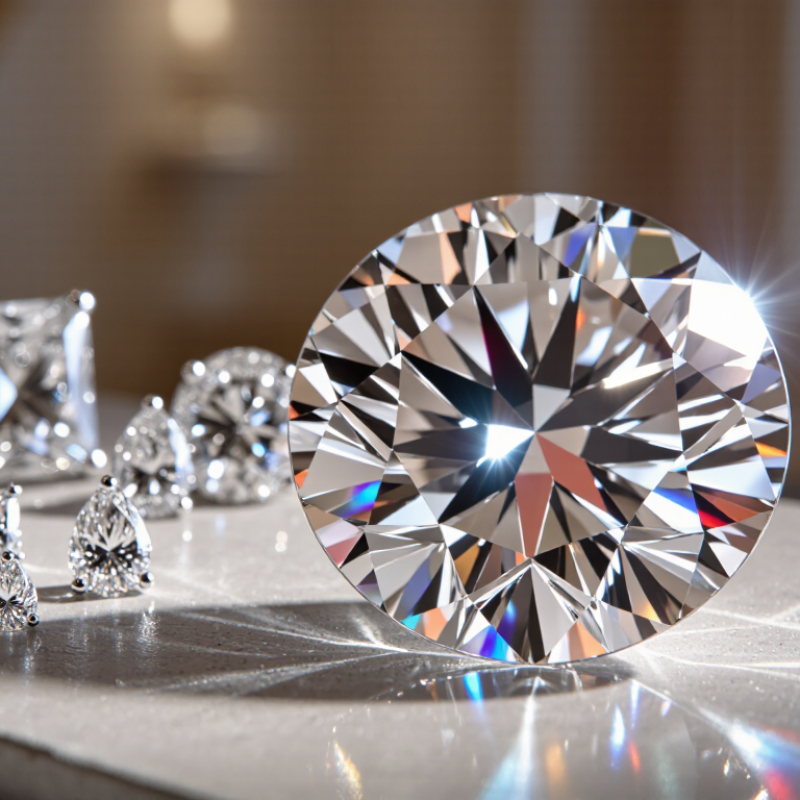
What Diamond Cut Means Among the Four Cs
Among the Four Cs, cut means how a diamond’s facets are proportioned, aligned, and finished—not its shape. These choices affect how light enters, reflects, and exits the stone. GIA’s Diamond Grading Report assigns round-brilliant cut one of five grades: Excellent, Very Good, Good, Fair, or Poor. GIA notes that a standard round brilliant has 57 facets, or 58 with a culet. Those small surfaces work together to create brightness, flashes of color, and sparkle.
Cut is different from carat weight. Two diamonds can weigh the same but look different face-up if their proportions vary. A poorly proportioned stone may allow light to escape through its pavilion, making the center appear darker. Still, a top cut grade does not guarantee that every viewer will prefer the diamond’s look. Lighting, setting, and personal taste matter, too. That part is easy to overlook.
Tips: Compare stones under the same lighting. Watch for bright, even reflections as you tilt each diamond. Check the grading report, then trust your eyes as well. A report helps; it cannot make the choice for you. (Sources: GIA, Diamond Grading Report and “Diamond Cut.”)
Why Is Cut the Most Important C in Diamond Quality in 2026?
What Diamond Cut Means Among the Four Cs
Cut affects how a diamond returns light, shaping its brightness, fire, and scintillation. This chart shows the ordered GIA cut-grade categories for standard round brilliant diamonds; the numbers represent rank, not measured performance. Cut does not change a diamond’s carat weight, color, or clarity.
How Cut Affects a Diamond’s Brightness, Fire, and Scintillation
A diamond’s cut controls how light moves through it, not merely how many facets it has. When a well-proportioned round brilliant faces a light source, brightness appears as white light returned to the eye. Fire separates that light into flashes of color. Scintillation is the pattern of light and dark that shifts as the stone or viewer moves. Tiny changes matter. A shallow pavilion can let light escape through the bottom; a very deep one may hide weight below the girdle. The result can look smaller or less lively face-up.
The Gemological Institute of America’s published account of its round-brilliant cut research describes more than 70,000 observations used to develop its grading approach. GIA evaluates factors including brightness, fire, scintillation, weight ratio, durability, polish, and symmetry. That framework is useful, but a grade cannot capture every viewing condition. A diamond may sparkle strongly under a pinpoint lamp and look quieter in diffuse daylight. Notice the difference. Compare stones in more than one setting, and watch how quickly flashes return as you tilt them. A little unevenness can be easy to miss in a photograph; it may be obvious in person. I would not judge cut by sparkle alone. The pattern matters, too.
Why Is Cut the Most Important C in Diamond Quality in 2026? — How Cut Affects a Diamond’s Brightness, Fire, and Scintillation
| Cut grade |
Brightness (white-light return) |
Fire (colored flashes) |
Scintillation (sparkle in motion) |
Typical face-up appearance |
| Excellent |
Generally very strong; well-arranged facets return much of the light entering the diamond toward the viewer. |
Distinct flashes of spectral color can appear as the diamond or light source moves. |
Crisp, balanced pattern of bright and dark flashes. |
Usually lively and bright, with strong contrast and well-defined sparkle. |
| Very Good |
Strong overall light return; differences from the top grade may be subtle in many viewing conditions. |
Good colored flashes, though their balance or intensity may differ from a top-performing cut. |
Noticeable sparkle with slightly less uniformity or contrast in some lighting. |
Bright and attractive; any visual difference depends on the individual diamond and lighting. |
| Good |
A reasonable amount of light is returned, but some may escape through the pavilion or be less effectively directed. |
Fire can be visible but may be less pronounced or less evenly distributed. |
Sparkle is present but may appear less crisp or balanced. |
Can look appealing, though it may appear less lively than a better-performing cut. |
| Fair |
More light leakage or less effective return may reduce the stone’s apparent brightness. |
Colored flashes may be limited or uneven. |
Movement may produce weaker or less consistent flashes. |
May look comparatively subdued, especially beside a well-cut diamond of similar size. |
| Poor |
Substantial light leakage or poor light direction can make the diamond look noticeably dark or dull. |
Fire is often reduced because less light is returned in a way that produces visible colored flashes. |
Sparkle may be weak, uneven, or difficult to see. |
Often lacks the lively appearance associated with effective light performance. |
| Cut-related factor |
What it describes |
Why it matters visually |
| Proportions |
The relative dimensions and angles of a diamond’s table, crown, pavilion, and other parts. |
Their combined effect influences how light travels through and exits the diamond; no single measurement determines performance by itself. |
| Facet alignment and symmetry |
How consistently the facets are shaped, positioned, and aligned around the stone. |
Consistent alignment helps create an orderly pattern of light and dark areas and more even sparkle. |
| Polish |
The smoothness of the facet surfaces after finishing. |
Good polish supports clean light reflection; noticeable surface finish marks can affect appearance. |
| Shape and cut assessment |
Cut-grade systems and criteria vary by diamond shape; a single cut scale does not apply universally to every shape. |
When comparing grades, check that the diamonds have the same shape and were assessed using comparable criteria. |
Note: Cut-grade descriptions are general comparisons, not guarantees of identical appearance. Brightness, fire, and scintillation also vary with lighting, viewing angle, diamond shape, and the individual stone. Color and clarity describe different characteristics; cut most directly governs how effectively a diamond interacts with light.
Why Cut Influences a Diamond’s Appearance and Perceived Size
A diamond’s cut affects how much light returns to the eye, shaping its brightness, contrast, and sparkle. When its angles and proportions work well together, light is more likely to reflect through the crown instead of escaping through the sides or bottom. The result can look lively in ordinary room light, not just beneath jewelry-store spotlights. Small details matter.
Cut also influences perceived size. Two diamonds with the same carat weight may look different face-up because one carries more weight in its depth, below the visible surface. A shallower stone may appear wider, but if it is cut too shallow, it can look glassy or lose brightness. A well-proportioned stone often balances spread with light performance.
Shape changes the comparison, too. Long outlines can appear larger than round ones at a similar weight, while broad shoulders may make some fancy shapes seem substantial. I still find this easy to misjudge from measurements alone. View a diamond from above, then tilt it under diffuse light and watch for dark areas, flashes, and brightness across the whole face. Carat is a number; appearance is something your eyes assess.
How Diamond Cut Quality Is Evaluated in 2026
In 2026, diamond cut quality is assessed through measured proportions, craftsmanship, and observed light performance. For round brilliant diamonds, evaluators commonly consider brightness, fire, scintillation, polish, and symmetry. Brightness is the white light returned through the crown. Fire appears as small flashes of color. Scintillation is the pattern of light and dark areas when the stone moves.
Light matters.
Measurements help explain what the eye sees. A very deep stone may look smaller from above, while a shallow one can let light escape through its base. Evaluators examine features such as table size, depth, and facet alignment, then compare them with grading criteria. Exact methods can vary between laboratories, and cut grading is not equally standardized for every shape. Look closely. Under diffuse light, a diamond may seem bright; under a focused lamp, it may show stronger flashes. Both settings tell part of the story. A grading report offers useful evidence, but viewing the stone in ordinary lighting can reveal whether its pattern feels lively and balanced. I would not treat one number as the whole answer.
How to Compare Cut Quality When Choosing a Diamond
When comparing diamond cut quality, start with the grading report, but don’t let one label make the decision. For round brilliant diamonds, an independent laboratory’s cut grade can help compare light return, brightness, fire, and pattern. Check polish and symmetry too; they describe surface finish and alignment, not the whole visual effect. Proportion diagrams can add context, but measurements alone don’t predict exactly how a diamond will look. Numbers are a starting point.
Whenever possible, view two stones side by side under the same neutral lighting. Look for bright areas across the face, crisp flashes as the diamond moves, and dark patches that remain visible. Then tilt each stone slowly. A lively diamond should change; it shouldn’t look uniformly bright from every angle. Small differences matter. In oval and pear shapes, inspect the bow-tie area across the center, while remembering that some contrast is normal.
Compare diamonds of similar size and shape, and ask to see them outside strong showroom spotlights. Those lights can make almost any stone sparkle. A grading report is useful, yet your eyes may notice a pattern you prefer—or a distraction the report doesn’t describe. I find this part less tidy than charts suggest. For fancy shapes, cut grading is not always standardized, so examine the actual stone and confirm the report’s details with a qualified jeweler.
Conclusion
Why is the "cut" the most important C in diamond quality? Cut determines how effectively a diamond interacts with light, shaping its brightness, colorful flashes, and sparkle as it moves. While the other Cs describe characteristics such as size, color, and clarity, cut has a direct influence on how lively and appealing a diamond looks. A well-proportioned diamond can return light beautifully, while a poorly executed cut may appear dull even when the stone has strong grades in other areas.
Cut also affects a diamond’s visual balance and how large it appears face-up. In 2026, buyers can assess cut using grading reports alongside details about proportions, symmetry, polish, and overall light performance. When comparing stones, consider their appearance in different lighting and weigh cut quality against the other Cs and your budget. Looking beyond a single grade can help you choose a diamond that looks bright, balanced, and attractive to you.

 Locke Jewelry