How to insure high-value jewelry collections begins with a difficult truth: standard homeowners insurance may not reflect the real value of rare jewels. The National Association of Insurance Commissioners reports that many homeowners policies limit jewelry theft coverage to approximately $1,500. That figure can disappear beside one signed diamond ring, antique brooch, or colored gemstone.
The 2024 JCK State of the Industry report also shows continued strength in luxury jewelry demand, while changing prices make older appraisals increasingly unreliable. A collection purchased for $250,000 may require a much higher replacement limit today. Market value moves. Policies often do not.
Dustin Lemick, founder and CEO of BriteCo and a jewelry insurance specialist, explains, “A jewelry appraisal is the foundation of proper insurance coverage.” That foundation needs detail: gemstone grades, metal purity, maker marks, photographs, receipts, and secure storage information. Vague descriptions create fragile protection.
How to insure high-value jewelry collections properly also requires choosing between scheduled coverage and broader valuables policies. Scheduled coverage can address mysterious disappearance, accidental damage, worldwide travel, and agreed-value settlement. Yet every insurer defines these terms differently. Read the exclusions carefully.
A locked safe helps. So does a current appraisal.
Professional appraisers, independent jewelers, and specialist insurers can provide stronger evidence than informal estimates. The Insurance Information Institute recommends reviewing limits, deductibles, and endorsements before a loss occurs. That advice sounds simple, but many collectors delay it.
That delay is the weakness.
A complete inventory should be stored securely, updated after acquisitions, and reviewed after major market changes. No policy removes every risk. However, accurate valuation, documented ownership, sensible security, and expert review can make a collection far less vulnerable when something goes wrong.
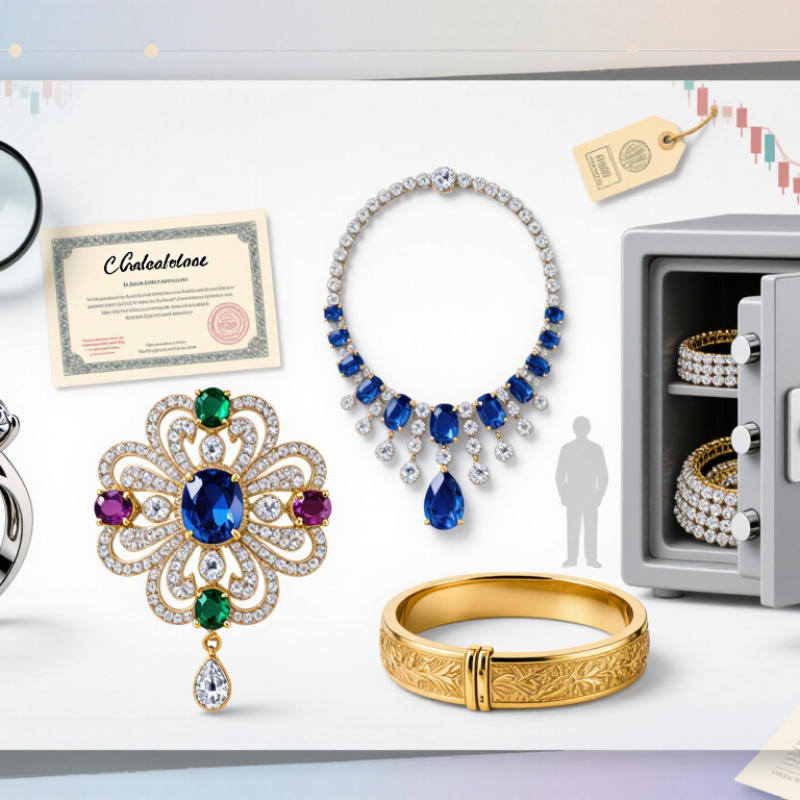
High-value jewelry needs more than a standard contents policy. Each piece carries financial, emotional, and practical risks. An experienced appraiser should record metal, stones, craftsmanship, and current replacement value. Request dated photographs, purchase documents, and notes about custom work. Do not rely on memory. Clear records support fair discussions when a claim becomes necessary.
Coverage should match how the collection lives. A ring kept in a home safe differs from earrings worn during travel. Ask whether the policy covers accidental loss, theft, damage, and temporary removal from home. Check whether settlement means cash value or like-kind replacement. That difference matters when rare materials or custom details are difficult to source. Read the exclusions slowly.
Security measures can also shape underwriting. A monitored alarm, certified safe, and controlled access show responsible risk management. They do not replace honest disclosure. Tell the insurer about renovations, frequent travel, storage changes, and pieces loaned to family. Specialist guidance is valuable when prices fluctuate. Review appraisals and coverage limits annually, although many owners postpone this task. I would not assume a higher premium means stronger protection. The wording must fit the collection’s daily reality.
A reliable insurance review starts with an accurate valuation, not a purchase receipt alone. An independent jewelry appraiser should inspect each piece, including gemstones, metal quality, craftsmanship, and current market conditions. Request a detailed report with photographs, measurements, identifying marks, and replacement estimates. Values can change quickly. A three-year-old appraisal may no longer reflect today’s costs.
Ownership records matter as much as value. Keep invoices, estate documents, gift records, certificates, and repair receipts in a secure digital archive. Record when and where each item is stored. A neat spreadsheet helps, but it does not prove ownership by itself. I would also photograph jewelry beside a ruler, especially unusual clasps, settings, or engraving. Small details can support a claim.
Collection risks often hide in ordinary routines. Home safes may reduce theft exposure, while frequent travel increases loss and damage risks. Review coverage for mysterious disappearance, accidental damage, pairs, newly acquired pieces, and temporary storage. Ask about security requirements and valuation methods before accepting a policy. Some limits may apply outside the home. That detail is easy to miss. Reassess the collection after major purchases, renovations, moves, or significant market changes. No inventory is perfect, and forgotten updates can create an uncomfortable gap when protection is needed.
Standard homeowners insurance is often the cheapest starting point, but it may leave a valuable collection exposed. The NAIC’s 2023 Consumer’s Guide to Homeowners Insurance notes that jewelry theft coverage commonly has a $1,500 limit. The Insurance Information Institute also advises reviewing special sublimits before relying on a basic policy. That amount may not replace one engagement ring.
A scheduled personal property endorsement lists each piece separately, using appraisals, photographs, and purchase records. It usually offers broader protection than ordinary contents coverage. Ask whether it includes accidental loss, mysterious disappearance, worldwide travel, and damage during professional cleaning. Replacement-cost coverage can restore an equivalent item, while actual-cash-value coverage deducts depreciation. The difference can be painful.
Standalone valuables coverage may suit collections with watches, heirlooms, or several gemstones. It can provide higher limits and fewer restrictions, but premiums and deductibles vary by risk profile. The FBI’s 2023 Crime Data Explorer recorded more than 800,000 burglary offenses nationwide, so security measures can influence underwriting. A monitored alarm, locked safe, and updated inventory may help. Not always.
Appraisals should be refreshed regularly, especially when market prices change. A report that is five years old may no longer reflect replacement cost. I would compare exclusions line by line, not just premiums. Lower cost can become false economy. Even careful owners miss pair-and-set clauses. Ask how one lost earring would be valued.
High-value jewelry insurance begins with precise documentation, not a rushed application. The Insurance Information Institute notes that standard homeowners policies often place special limits on jewelry theft claims, commonly around $1,500. That amount may not cover one meaningful piece.
Create a separate inventory for every item. Record purchase date, metal purity, stone measurements, treatments, and identifying marks. Add a recent professional appraisal stating replacement value. Include receipts, laboratory reports, photographs, and short videos showing clasps or hidden engravings. Photograph each piece beside a ruler. Small details matter.
Keep digital copies in encrypted storage and paper copies outside your home. The FBI’s 2023 Crime in the United States report recorded more than six million property-crime offenses, reinforcing the value of organized records. Ask the appraiser about credentials and update values when market prices change. Many collectors wait too long. That is a common weakness.
Your insurer may require scheduled coverage, separate deductibles, or specific storage evidence. Confirm these requirements in writing before paying the premium. A spreadsheet is useful, but it can conceal missing receipts or duplicate entries. Review the inventory annually with a second person. Fresh eyes help. Mistakes happen, especially after inheritance or a major purchase. Insurers may also request proof of ownership, so retain estate documents and transfer records when applicable.
| Documentation Category | Information to Record | Why Insurers Need It | Recommended Practice |
|---|---|---|---|
| Professional appraisal | Item description, materials, gemstone measurements, estimated replacement value, appraisal date, and appraiser credentials. | Provides an independent basis for determining whether the scheduled limit is appropriate. | Use a qualified, independent jewelry appraiser and confirm that the report states its purpose and valuation method. |
| Purchase records | Original invoice, date of purchase, purchase price, seller details, taxes, and any repair or customization charges. | Helps verify ownership, acquisition history, and the original characteristics of the item. | Keep scanned copies in a secure digital folder and retain the originals in a protected location. |
| Gemstone grading report | Gemstone type, carat weight, color, clarity, cut details, measurements, treatments, and report number when available. | Creates an objective record of the stone’s identity and quality characteristics. | Match the report number and measurements with the jewelry item and store the report with the appraisal. |
| Detailed photographs | Front, side, back, clasp, hallmarks, engravings, gemstone settings, and any distinctive marks. | Supports identification, ownership verification, and comparison after loss or damage. | Take clear, high-resolution images under good lighting and label each image with the item reference number. |
| Inventory register | Unique item ID, description, category, current value, location, purchase date, and related documents. | Gives the insurer and policyholder a consistent overview of the entire collection. | Use a spreadsheet or household inventory system and update it whenever an item is added, sold, repaired, or transferred. |
| Ownership and provenance records | Inheritance documents, gift records, estate paperwork, prior insurance schedules, or other lawful ownership evidence. | Helps establish legal ownership, especially for inherited or previously owned jewelry. | Keep supporting documents together and record the date and method by which ownership changed. |
| Repair and maintenance history | Repair dates, work performed, replacement parts, resizing, stone tightening, cleaning, and service invoices. | Documents condition and may show that the item was properly maintained before a claim. | Record repairs promptly and photograph the item again after significant work. |
| Security information | Safe specifications, alarm details, monitored security services, storage location, and access controls. | Some policies apply security requirements or offer different terms based on storage and protection measures. | Ask the insurer which safeguards are required before selecting or installing equipment. |
| Use and location details | Primary residence, travel frequency, regular wear, storage arrangements, and whether items are loaned or displayed. | Coverage can depend on where jewelry is kept, how it is used, and whether it leaves the insured premises. | Disclose frequent travel, exhibitions, loans, or temporary storage and review territorial limits in the policy. |
| Current valuation review | Updated replacement value and changes in precious-metal, gemstone, labor, and market costs. | Jewelry values can change, creating a risk of insufficient limits or unnecessary premiums. | Review values periodically and after major market changes, purchases, sales, redesigns, or inheritance events. |
| Policy schedule and endorsements | Scheduled item limits, deductibles, covered causes of loss, exclusions, valuation basis, and special conditions. | Defines the actual scope of coverage and the documentation required if a claim occurs. | Read the policy wording carefully and obtain written confirmation for agreed values or special arrangements. |
| Secure backup and access plan | Encrypted digital copies, physical backups, emergency contacts, policy information, and document access instructions. | Ensures records remain available after theft, fire, flood, device failure, or relocation. | Maintain at least two secure copies in separate locations and restrict access to trusted individuals. |
Note: Documentation requirements, valuation rules, coverage limits, and appraisal intervals vary by insurer, policy type, and jurisdiction. Confirm the specific requirements before arranging coverage.
How to Insure High Value Jewelry Collections?
A jewelry insurance policy should change as your collection changes. Review it at least once a year, preferably with a qualified insurance professional. Check every listed item, including its description, value, metal, gemstones, and appraisal date. A ring described only as “diamond jewelry” may be difficult to identify after a loss.
Keep clear photographs from several angles. Record serial numbers, inscriptions, purchase documents, and recent valuation reports. Store digital copies securely, with a separate backup. Update the policy after buying, selling, inheriting, resizing, or repairing a piece. Market values can shift, and an old appraisal may no longer reflect replacement costs.
Read the exclusions carefully. Ask whether the policy covers accidental damage, loss outside the home, mysterious disappearance, or damage to matching sets. Confirm how the insurer handles a single missing earring or a damaged gemstone. Check deductibles, security requirements, and limits for travel or temporary storage. These details matter.
Do not assume your home policy provides enough protection. High-value collections often require scheduled coverage and professional documentation. An independent appraiser can help verify values without relying on guesswork. No inventory is perfect on day one. I would rather correct a small detail during a calm review than discover a major gap after a stressful event. Keep receipts, but do not depend on them alone. Condition, provenance, and current replacement value may also influence a claim.
An appraiser examines gemstones, metal quality, craftsmanship, and current market conditions. A receipt alone may be insufficient. Values change.
Request photographs, measurements, identifying marks, and replacement estimates. Record unusual clasps, settings, and engravings. Small details matter.
Keep invoices, gift records, estate documents, certificates, and repair receipts digitally. Store backups securely. A spreadsheet helps, but it does not prove ownership alone.
Review appraisals regularly, especially after major purchases or market changes. A three-year-old report may already be outdated. Five years is riskier.
Basic policies may impose low jewelry sublimits. One ring could exceed the available limit. Check the wording carefully.
It lists each jewelry item separately. Coverage may include accidental loss, mysterious disappearance, travel, and professional cleaning damage. Confirm every inclusion.
Replacement cost may fund an equivalent replacement. Actual cash value deducts depreciation. That difference can feel painful after a loss.
Use a locked safe and consider a monitored alarm. Review storage, travel, and temporary location rules. Security helps, but it is not magic.
Ask how one missing earring or damaged pair will be valued. Policies may treat individual pieces differently. This detail is easy to miss.
Recheck coverage after moving, renovating, traveling, or adding jewelry. Update photographs and storage details. No inventory is perfect.
How to insure high-value jewelry collections begins with understanding the unique risks associated with each piece, including theft, loss, accidental damage, and changes in market value. A proper insurance review should consider the jewelry’s appraised value, ownership records, storage arrangements, frequency of wear, and whether the collection includes rare, inherited, or custom-made items. These details help determine suitable coverage limits and identify gaps in protection.
Comparing insurance options is also essential, as policies may differ in deductibles, replacement methods, worldwide coverage, exclusions, and requirements for security measures. Owners should prepare appraisals, purchase receipts, photographs, certificates, and detailed inventories to support accurate underwriting and future claims. Finally, the policy should be reviewed regularly and updated whenever jewelry is acquired, sold, repaired, relocated, or significantly changes in value. With organized documentation and ongoing policy management, collectors can protect both the financial and personal significance of their jewelry.
