Why Is Provenance Important in Vintage Luxury Jewelry?

Time:2026-10-21 Author:Liam
0%

Provenance gives vintage luxury jewelry a traceable life. It can connect a brooch to a respected maison, an estate, or a documented auction. More importantly, it helps separate a compelling story from a convenient one. As jewelry historian Vivienne Becker says, “A jewel’s story can be as important as its design.” That idea shapes this guide.

What should I look for when buying vintage luxury jewelry? Begin with the evidence behind the piece. Ask for previous invoices, auction records, insurance valuations, signed boxes, or dated photographs. Examine hallmarks under magnification. Check whether the maker’s signature, metal marks, and construction match the claimed period. A Cartier bracelet from the 1930s should show details consistent with 1930s craftsmanship, not later alterations disguised as age.

Condition also matters. Look closely at worn prongs, stretched links, replaced stones, and uneven soldering. Restoration is not automatically negative. Poorly documented restoration is. Provenance cannot replace an independent appraisal or laboratory report. It is one part of a careful authentication process.

Some jewels have incomplete histories. That does not make them worthless. Still, I would pause. A missing paper trail may reflect private ownership, lost records, or an unclear past. The buyer must accept that uncertainty honestly. A reliable specialist should explain what is known, what is inferred, and what remains unproven. That transparency builds trust. It also protects the emotional value of owning jewelry with a real, responsibly documented history.
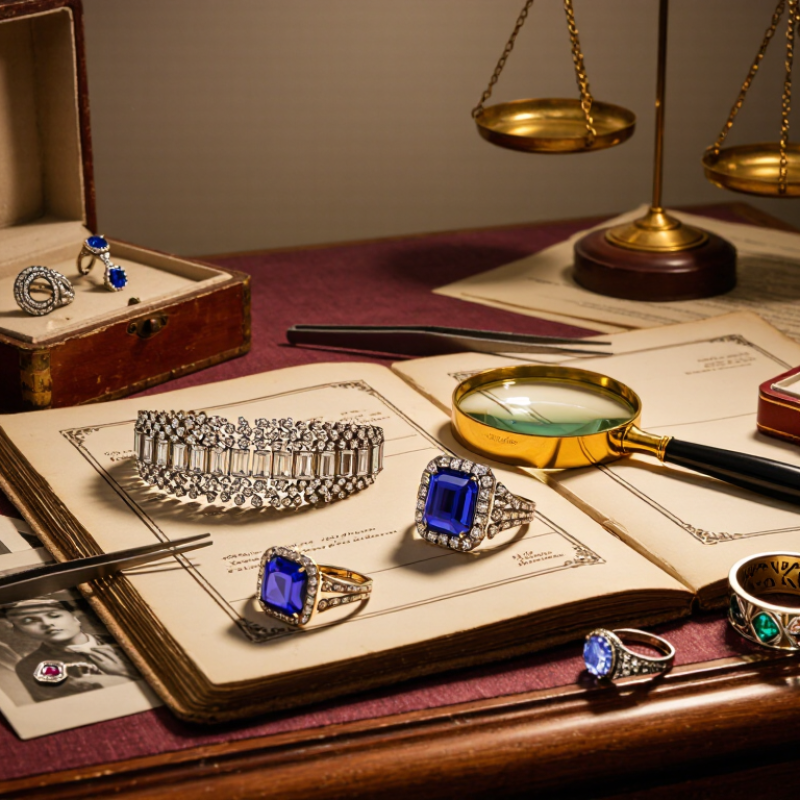
Why Is Provenance Important in Vintage Luxury Jewelry?

Defining Provenance in Vintage Luxury Jewelry

Provenance means the documented story behind a vintage luxury jewel. It connects the object to previous owners, dates, locations, and professional evaluations. It may include invoices, estate records, exhibition references, repair notes, or photographs. A receipt helps, but it is not enough. The strongest provenance forms a consistent chain.

This history matters because vintage jewelry is both wearable design and a collectible asset. Bain & Company’s 2024 luxury study valued the global personal luxury goods market at €363 billion in 2023. McKinsey & Company’s 2023 jewelry report projected annual market growth of 4–6% through 2025. As values rise, buyers need clearer evidence, not attractive storytelling. Provenance can support authenticity, explain rarity, and reveal whether stones or settings were later changed.

Look closely.

A credible specialist compares the jewel’s materials, construction, hallmarks, wear patterns, and documented history. Small details matter: softened engraving, an old repair seam, or a mismatched clasp can change the interpretation. Missing paperwork does not automatically make a piece illegitimate. However, uncertain ownership gaps should be stated openly. That honesty is part of professional practice. Even experts can misread altered pieces, especially when records are incomplete. The careful approach is to separate verified facts from reasonable opinions, then preserve every new report for the next owner.

Why Is Provenance Important in Vintage Luxury Jewelry?

Defining Provenance in Vintage Luxury Jewelry

Provenance is the documented history of a jewelry piece, including its date, origin, ownership, and supporting records. Hallmarks are one useful physical clue: they identify metal fineness and can help researchers assess whether an item's claimed age and origin are consistent.

Precious-metal fineness is expressed in parts per thousand. These standards are recognized in UK hallmarking regulations; a hallmark supports provenance research but does not, by itself, prove ownership history or authenticity.

Source: UK Hallmarking Act 1973 and official UK hallmarking guidance.

Tracing Ownership and Historical Records

Provenance gives a vintage luxury jewel a traceable human history. It records who owned it, when it changed hands, and how its condition evolved. In my experience examining older pieces, a receipt can matter as much as a beautiful setting. An estate invoice, dated photograph, insurance appraisal, or handwritten family note may connect the jewel to a specific period. Small details help. Matching metal marks, stone measurements, engraving style, and repair notes can support a consistent timeline. These details do not prove everything. Still, they reduce guesswork.

Historical records may also reveal important changes. A ring could have received a new setting, replacement stones, or professional restoration. Those updates do not always reduce its cultural value, but they should be recorded clearly. A qualified independent appraiser can compare physical evidence with archived documents. Their report should describe visible wear, measurements, testing methods, and any uncertainty. Clear language builds trust.

Ownership records can be incomplete, especially when jewelry passed through several generations. I have seen dates conflict between family stories and written documents. That is not unusual. It deserves careful review, not a forced conclusion. Privacy also matters when handling personal names, addresses, and estate papers. Reliable research separates verified facts from attractive speculation. A missing receipt does not automatically make a jewel suspicious. Likewise, a confident story does not automatically make it true.

Evaluating Authenticity Through Provenance Evidence

Why Is Provenance Important in Vintage Luxury Jewelry?

Evaluating Authenticity Through Provenance Evidence

In vintage luxury jewelry, provenance is more than an attractive story. It is a chain of evidence connecting an object to its past. A dated receipt, estate inventory, exhibition record, or workshop note can clarify where a piece traveled. These details help specialists compare age, materials, construction, and later alterations. Provenance cannot replace physical examination. It strengthens it.

When assessing a jewel, professionals look for consistency between documents and the object itself. Engraving style should suit the claimed period. Metal marks should be legible, correctly placed, and compatible with regional practice. Old photographs may reveal a missing stone, altered setting, or original clasp. Even handwriting, paper stock, and storage wear can provide useful context. None is conclusive alone. A reliable appraiser records observations, states uncertainties, and separates evidence from interpretation.

A weak provenance trail does not automatically prove a jewel is false. Genuine family pieces often lose paperwork over generations. Still, confident claims deserve careful questions: Who documented the item? When was the record created? Has the chain remained continuous? Sellers may repeat inherited descriptions without checking them. That is understandable, but not reliable. Independent opinions can also disagree when repairs obscure construction. Buyers should preserve invoices, photographs, measurements, and reports together. Evidence should remain traceable. Sometimes, the most honest conclusion is “not established yet.”

Understanding Provenance’s Role in Value and Rarity

In vintage luxury jewelry, provenance helps explain why one piece feels rarer than another. It records where the jewelry came from, who owned it, and how it reached the market. A dated invoice, estate record, exhibition label, or handwritten family note can add meaningful context. These details may support authenticity and strengthen buyer confidence. They also make the object more than a beautiful accessory.

Provenance can influence value, but it does not create value alone. Condition, craftsmanship, materials, age, and documented rarity still require careful evaluation. A brooch with a clear ownership history may command more interest than a similar piece without records. However, incomplete paperwork does not automatically make jewelry unimportant. Some histories were lost through inheritance, relocation, or ordinary neglect. That gap matters. It should be acknowledged, not disguised.

Tips: Ask for original receipts, dated photographs, appraisal documents, and previous sales records. Compare names, dates, descriptions, and measurements across every document. Consult a qualified jewelry appraiser when details conflict. Avoid treating dramatic stories as proof. A charming family tale may be sincere, yet still impossible to verify. This is where professional judgment becomes essential. Provenance can reveal rarity, but honest uncertainty can be part of the record too.

Identifying Risks When Provenance Is Unclear

Provenance matters because a vintage jewel is more than its metal and stones. It is a documented object with a history. When that history is unclear, buyers face risks involving altered settings, replaced stones, inaccurate dates, and incomplete ownership records. A missing invoice is not automatic proof of a problem. However, it should invite closer examination.

The 2024 Art Basel and UBS Art Market Report recorded global art sales of about $65 billion in 2023, while online sales reached $11.8 billion. That digital activity shows why photographs and online descriptions cannot replace physical verification. For vintage jewelry, request clear images of hallmarks, joints, clasps, stone backs, and repair areas. Compare them with an independent laboratory report and a qualified specialist’s written assessment. Small details matter. A fresh-looking clasp can be a warning sign.

Professional experience also requires admitting uncertainty. A respected auction record may support age, but it does not prove every component is original. The report should separate confirmed facts from assumptions. Ask who examined the piece, when it was inspected, and whether the opinion is independent. The 2023 Deloitte Art & Finance Report found that 85% of wealth managers considered art and collectibles relevant to client portfolios, increasing the need for reliable documentation. Still, paperwork can contain errors. A careful buyer leaves room for doubt, verifies conflicting details, and avoids paying a premium for an attractive story alone.

FAQS

What does provenance mean in vintage luxury jewelry?

Provenance is the documented story behind a jewel. It may show owners, dates, locations, repairs, and professional evaluations. A receipt helps, but one document is rarely enough.

Why does provenance matter when buying vintage jewelry?

It can support authenticity, explain rarity, and reveal later changes. A jewel may look original while containing a replaced stone or clasp. Physical examination remains essential.

Which documents can support a jewel’s history?

Useful records include invoices, estate inventories, exhibition references, repair notes, photographs, and workshop records. Keep them together. A clean paper trail is valuable.

Can missing paperwork prove that a jewel is fake?

No. Family jewelry often loses documents across generations. Missing records create uncertainty, not automatic proof of falsehood. The object needs closer examination.

What physical details should specialists compare?

They may inspect materials, construction, hallmarks, engraving, clasps, joints, and wear patterns. A softened engraving can suggest age. A fresh clasp may suggest later replacement.

Can old photographs help authenticate vintage jewelry?

Yes. Photographs may show an earlier clasp, missing stone, or different setting. Image quality matters. A blurred photograph can mislead careful viewers.

What risks appear when provenance has gaps?

Gaps may hide altered settings, replaced stones, inaccurate dates, or unclear ownership. They do not always indicate a problem. They should invite direct questions.

How should buyers handle conflicting expert opinions?

Ask who examined the jewel, when, and under what conditions. Separate confirmed facts from professional opinions. Experts can misread altered pieces. I may be wrong, too.

What should a careful buyer preserve after purchasing a vintage jewel?

Preserve invoices, photographs, measurements, laboratory reports, and written assessments. Record new repairs. Keep every update traceable for the next owner. Details disappear quickly.

Conclusion

Provenance is the documented history of a vintage luxury jewelry piece, showing where it came from, who owned it, and how it has been preserved over time. Ownership records, dated receipts, appraisals, exhibition notes, photographs, and reputable archival documents can help establish a clear chain of history. This evidence may support authenticity by matching the jewelry’s materials, craftsmanship, design period, and condition with its stated background, while also revealing details that make a piece rare and historically significant.

What should I look for when buying vintage luxury jewelry? Examine whether the provenance is consistent, specific, and supported by credible documentation rather than vague claims. A well-documented history can increase confidence, desirability, and value, whereas unclear or incomplete provenance may create risks such as uncertain ownership, inaccurate dating, undisclosed alterations, or overpricing. Buyers should compare records with the jewelry itself and seek an independent professional evaluation before making a final decision.

Liam

Liam

Liam is a dedicated marketing professional with a profound expertise in the industry, where he excels at highlighting the unique advantages of our core products. With a keen understanding of market trends and consumer needs, Liam frequently updates our company’s professional blog, providing......