Black-tie dressing rewards intention, not excess. The right jewelry should frame your face, complement your neckline, and remain comfortable through dinner, photographs, and dancing. This guide explains How to style statement jewelry for black-tie events without letting one dramatic piece overpower your entire look.
Start with the dress. A strapless gown can support sculptural earrings or a bold collar necklace. A high neckline usually needs earrings instead. Keep the metal consistent when possible, but do not fear a thoughtful contrast. A warm gold bracelet can soften a cool satin gown. Small details matter. Check the clasp, stone settings, and weight before leaving home. Heavy earrings may look impressive, then become painful after an hour.
Jewelry stylist Iris Apfel famously said, “Jewelry is the most transformative thing you can wear.” Her observation captures the power of statement pieces, but transformation still needs control. Choose one visual focal point. If the necklace is dramatic, keep the earrings quieter. If the earrings sparkle intensely, let the neckline breathe. A simple clutch and polished shoes often provide better balance than additional accessories.
There is no flawless formula. Personal style, cultural meaning, and comfort should remain part of the decision. Try the complete outfit under evening lighting. Take a side photograph. You may notice an awkward proportion that the mirror hides. That small pause can prevent a beautiful necklace from competing with your face. The goal is not to look decorated. It is to look deliberate, confident, and entirely yourself.
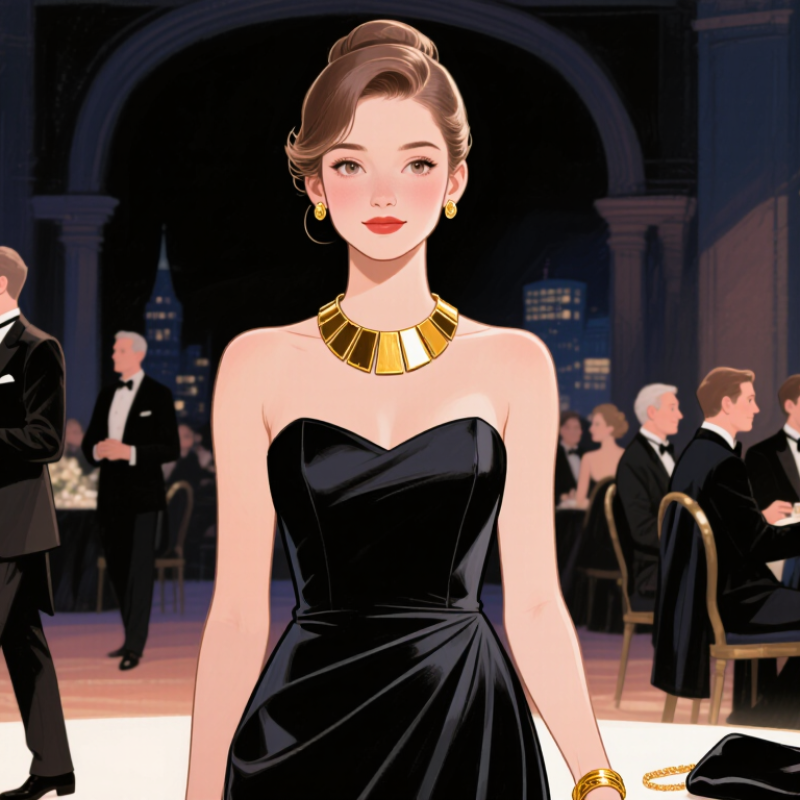
At a black-tie event, jewelry scale should look intentional, not oversized. GIA evaluates diamonds through the 4Cs: color, clarity, cut, and carat weight. Cut often controls sparkle most visibly. GIA’s round-brilliant scale includes Excellent, Very Good, Good, Fair, and Poor. For statement earrings, Excellent or Very Good cut can create strong movement without excessive carat weight. I have found that two lively stones often look more refined than one heavy, dull center stone.
Color and clarity also shape evening impact. Near-colorless diamonds can appear bright against black fabric, while slightly warmer stones may complement gold settings. Clean-looking clarity matters more than a flawless grade from a normal viewing distance.
Carat weight sets presence, but proportion sets elegance. GIA notes that its overall cut grade applies to standard round brilliants; fancy shapes require closer inspection of symmetry, depth, and light return. That distinction is easy to miss.
Tips: Choose one focal area. Wear chandelier earrings with a restrained necklace, or reverse the balance. Match stones by visual brightness, not merely certificate grades. The Knot’s 2024 Real Weddings Study reported an average engagement-ring spend of about $5,500 in 2023, yet event jewelry does not need to mirror that budget. Set a practical ceiling, then prioritize cut quality. I sometimes overestimate size in a showroom. Step back under soft, neutral lighting. A mirror may reveal that a smaller pair moves better. Erotidore
For black tie events, statement jewelry should look intentional, not overloaded. Begin with the metal’s fineness, using CIBJO’s Precious Metals Blue Book as a reliable reference. Numbers such as 750, 585, and 950 indicate parts per thousand of precious metal. A 750 marking, for example, represents 75% gold. Always check the hallmark and product documentation. CIBJO provides industry guidance, while local regulations determine legal marking requirements.
Tip: Match metal tone with the garment’s temperature. Bright white metals sharpen a black velvet gown, while warm gold can soften satin or deep jewel tones. Silver, gold, and platinum may appear similar under evening lighting. Their surface finish changes the effect. Polished metal reflects candlelight strongly; brushed metal looks quieter and more modern.
Keep one feature dominant, such as sculptural earrings or a broad cuff. Let smaller pieces support it. A certified fineness marking does not automatically prove excellent craftsmanship, so inspect settings, clasp movement, and stone security before the event. I sometimes prefer a slightly imperfect handmade surface; it can feel more personal than flawless uniformity. Still, uneven edges or loose components deserve attention. Choose verified records, ask clear questions, and avoid relying on appearance alone.
Top Tips to Style Statement Jewelry for Black Tie Events
Create One Focal Point with the 1-2-3 Jewelry Styling Rule
At a black tie event, let one jewelry piece command attention. A sculptural necklace, chandelier earrings, or a wide cuff can become your focal point. The 1-2-3 rule keeps the look polished: choose one statement piece, add two quieter accents, and check three visual details before leaving.
Your supporting pieces should echo the main design without competing. Pair dramatic earrings with a slim bracelet and one delicate ring. If the necklace is bold, choose small earrings and a restrained cuff. I often test the outfit under warm indoor lighting, because stones can appear brighter than expected. That mistake is easy to miss.
Check three things: neckline, color, and movement. A high neckline usually suits earrings or a cuff better than a necklace. Metals should relate to the gown, but they do not need to match perfectly. Movement matters too; loose earrings can catch against hair while dancing. Wear the pieces for ten minutes at home. Notice pressure, noise, and slipping clasps. Comfort is part of elegance.
Do not overload a simple dress just because the jewelry feels special. One memorable detail often photographs better than several competing ones. Still, the rule is not absolute. A very minimal gown may support two stronger pieces, especially when their shapes remain distinct. There is room for judgment.
Create One Focal Point with the 1-2-3 Jewelry Styling Rule
| Styling Step | Primary Focus | Recommended Jewelry | Best Use at a Black Tie Event | Balance Check |
|---|---|---|---|---|
| 1. Choose One Focal Point | Select the area that should attract attention first. | A bold necklace, chandelier earrings, cocktail ring, or sculptural cuff. | Match the focal piece to the dress shape: a necklace for an open neckline, earrings for an updo, or a cuff for sleeveless styling. | Keep the strongest visual detail in one area rather than competing across the face, neck, wrists, and hands. |
| 2. Add Two Supporting Pieces | Create coordination without matching every item exactly. | Pair the focal piece with two restrained accessories, such as slim earrings and a delicate bracelet. | Use supporting pieces to repeat one element, such as metal tone, gemstone color, shape, or texture. | If the focal piece is large or highly detailed, make both supporting pieces visually lighter. |
| 3. Edit to Three Visible Jewelry Zones | Limit visual density for a polished finish. | For example: earrings, one necklace, and one ring; or earrings, one cuff, and one ring. | A useful approach when the gown already includes sequins, beading, lace, embroidery, or a dramatic neckline. | Remove one piece if the outfit, hairstyle, or accessories already create strong visual interest. |
| Neckline Guide | Coordinate jewelry with the open space around the neckline. | Strapless and sweetheart: necklace or statement earrings. V-neck: pendant or drop earrings. High neck: earrings and bracelet. | Let the neckline determine whether the focal point belongs near the face or on the upper torso. | Avoid placing a large necklace directly over a heavily embellished bodice. |
| Earring Guide | Frame the face while considering hairstyle and neckline. | Choose chandelier or drop earrings for an updo; choose refined studs or short drops when the necklace is prominent. | Use earrings as the focal point when the dress has a clean neckline or when the hair is swept away from the face. | Check that earrings do not catch on hair, fabric, or shoulder details while moving. |
| Metal and Color Coordination | Build harmony between jewelry, gown, and accessories. | Use one dominant metal and repeat a related color or finish in one supporting piece. | Warm metals can complement warm colors; cool metals can complement cool colors. Neutral metals can work with many formal palettes. | Mix metals only when the combination looks intentional and one metal clearly leads. |
| Fabric and Embellishment Check | Prevent texture and shine from competing. | Choose smoother, simpler jewelry with sequins or metallic fabric; use more texture with a plain, matte gown. | Keep the jewelry proportionate to the dress’s surface detail and reflectivity. | A detailed gown usually needs fewer accessories, not more. |
| Final Comfort and Proportion Test | Make sure the look remains elegant in motion. | Test the complete combination while standing, sitting, walking, and holding a small evening bag. | Wear the jewelry briefly before the event to check weight, movement, clasp security, and fabric compatibility. | The final look should feel intentional, comfortable, and visually balanced from head to hand. |
For black tie dressing, start with the neckline, not the jewelry box. A deep V usually needs a pendant that ends above the bust. A strapless gown can support a wider collar or a dramatic drop. Keep the visual weight balanced. Heavy earrings with a heavy necklace often compete for attention.
Carat weight helps make that decision more precise. The Gemological Institute of America defines one carat as 0.2 grams. The Federal Trade Commission also advises separating individual carat weight from total carat weight. Therefore, four 0.25-carat stones are not the same visual statement as one one-carat stone. For a narrow face, try earrings totaling about 0.5 to 1 carat. A wider neckline may tolerate more, especially with restrained earrings. These figures are styling guides, not strict rules.
The World Gold Council reported approximately 1,877 tonnes of global gold jewelry consumption in 2024. That scale reflects continuing demand for substantial, wearable pieces. Yet bigger is not automatically more elegant. In a fitting, I would photograph the complete look from several steps away. Check whether the necklace ends near the neckline’s strongest point. My own proportion rule sometimes fails. Fabric shine, hairstyle, and posture can change everything. Leave a little breathing room. It often looks more expensive than adding another stone.
At a black-tie fitting, I place the jewelry beside the gown before choosing accessories. A dramatic necklace needs clean fabric and an open neckline. Large earrings often work better with a restrained bracelet. The metal should repeat a detail in the dress, clutch, or shoes. This creates balance without making every piece compete for attention.
Quality comes before sparkle. Ask for the original GIA report when buying a significant gemstone. Check the report number, measurements, shape, color description, clarity, and treatment information. A GIA report identifies documented characteristics; it is not an appraisal or a guarantee of future value. Verify the report through the laboratory’s official database when available. I once focused too heavily on brilliance. That was a mistake. A stone can look impressive under showroom lights but appear different in evening settings.
Disclosure matters as much as styling. Under U.S. Federal Trade Commission guidance, sellers should clearly disclose whether a stone is lab-grown, imitation, or treated. Treatments that affect value, care, or durability should not be hidden in vague wording. Ask for written details before paying, especially for heat, fracture filling, coating, or irradiation. Keep the report and sales description together. If the answers feel rushed, pause. A reputable seller should explain limitations plainly and allow independent verification. For a formal event, choose secure clasps and inspect prongs before leaving home. Beautiful jewelry should not require guesswork.
Numbers show precious-metal parts per thousand. A 750 mark means 75% gold. Check the hallmark and product documents. Local rules still matter.
Pair bright white metal with black velvet or cool fabrics. Warm gold softens satin and deep jewel tones. Evening lights can confuse colors. Surface finish changes everything.
Keep one feature dominant, such as sculptural earrings or a broad cuff. Let smaller pieces support it. Too many focal points create visual noise. Keep it simple.
Inspect the settings, clasp movement, edges, and stone security. A fineness mark does not prove excellent workmanship. Slight handmade irregularities may feel personal. Loose parts need attention.
Place the jewelry beside the gown before choosing accessories. A dramatic necklace needs an open neckline. Large earrings pair well with a restrained bracelet. Repeat one metal detail from the shoes or clutch.
Check the report number, measurements, shape, color, clarity, and treatments. Use the issuing laboratory’s official database when available. A report describes documented features. It is not a value guarantee.
Ask whether the stone is lab-grown, imitation, or treated. Request written details about heat, fracture filling, coating, or irradiation. Treatment can affect care, durability, and value. Vague wording deserves caution.
View the stone under softer evening lighting when possible. Showroom lights can exaggerate brilliance. I once trusted sparkle too much. That was a mistake.
Pause before paying. Ask clear questions and request independent verification. Keep the report with the sales description. A reliable seller should explain limitations plainly.
Inspect prongs, clasps, and stone movement at home. Choose secure closures for active evening wear. Test the piece gently. Beautiful jewelry should not require guesswork.
How to style statement jewelry for black-tie events begins with choosing pieces that match the formality of the occasion without overwhelming the outfit. Use the 4Cs—cut, color, clarity, and carat weight—to assess gemstone quality, while considering how different cut grades affect brilliance and visual scale. Select metals that meet recognized international precious-metal standards, and coordinate their tone with the gown, accessories, and overall styling.
Create one clear focal point by following a simple 1-2-3 rule: one dominant statement piece, two supporting details, and no more than three major jewelry elements. Balance necklaces, earrings, and bracelets with the neckline and silhouette, using proportion and carat weight to maintain harmony. Before purchasing, review an independent gemstone report and confirm that treatments, origins, and material details are clearly disclosed according to applicable consumer-protection requirements. This approach creates an elegant, polished, and well-balanced black-tie appearance.
